





CVD silicon carbide technology: high-performance solutions for semiconductor key components
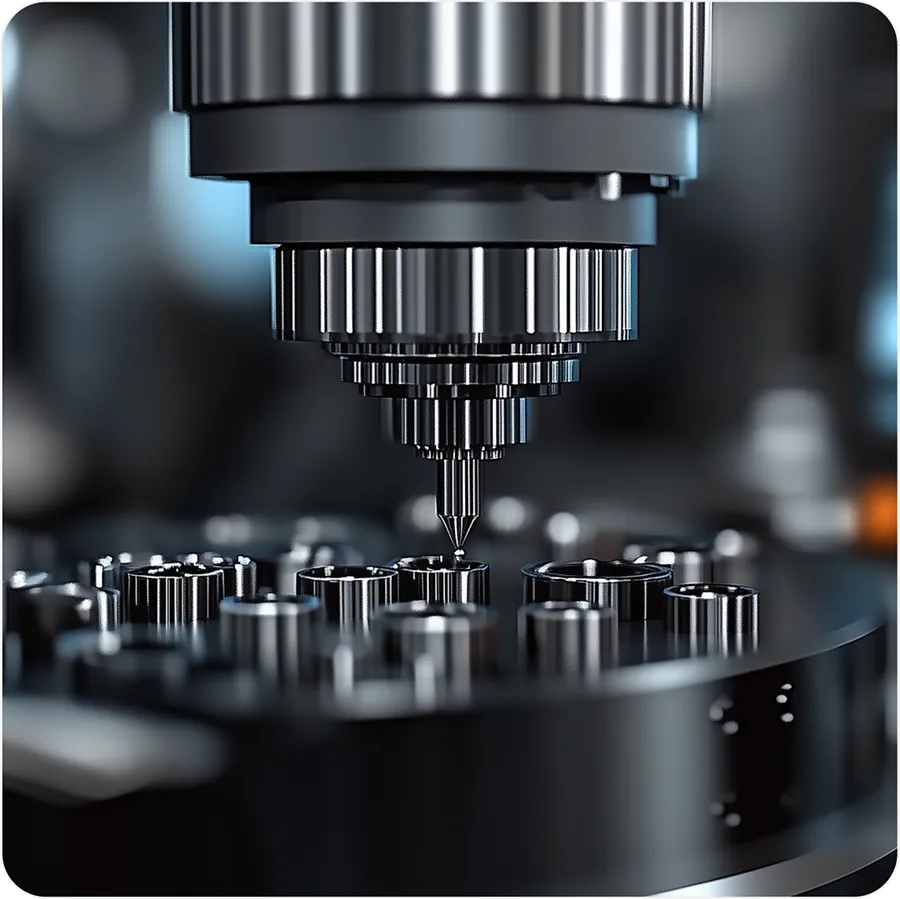
Chemical vapor deposition (CVD) silicon carbide technology is a process technology for growing a dense and high-purity silicon carbide crystal film on the surface of a substrate through a high-temperature chemical reaction. Unlike ordinary coatings, CVD silicon carbide coatings have a highly ordered crystal structure at the microscopic level, and their properties are consistent with bulk silicon carbide crystals, which can provide surface performance improvements for various substrate materials.
CVD silicon carbide coating has a series of excellent characteristics: it can maintain high strength and stability in high temperature environments, has strong oxidation resistance, and its working temperature is much higher than that of most metals and alloys; it has excellent resistance to most strong acids, alkalis, and molten salts; its hardness is close to diamond, and its friction coefficient is low, making it an ideal choice for the preparation of wear-resistant parts; at the same time, it has high purity and high density, which can effectively block the penetration and diffusion of impurities.
In the field of semiconductor manufacturing, CVD silicon carbide technology has important application value. CVD silicon carbide components are mainly used for focus rings, edge rings, gas showerheads and cavity liners in etching equipment, as well as silicon carbide coated graphite bases, trays and wafer carriers in epitaxial and MOCVD equipment. Its core value is to improve plasma corrosion resistance, reduce metal contamination and particle release, improve thermal uniformity and process stability, and extend the replacement cycle of key consumables.
In etching equipment, high-purity, low-particle, plasma-resistant CVD silicon carbide is gradually replacing some silicon, quartz, and oxide ceramic components. In epitaxy and MOCVD scenarios, silicon carbide-coated graphite bases remain mainstream due to thermal uniformity, cost, and feasibility of large-scale processing. In addition, CVD silicon carbide technology is also used in high-end fields such as hot end components of aerospace engines, thermal protection systems for hypersonic aircraft, and fuel particle cladding for the nuclear industry.
With the continuous improvement of particle and metal contamination control requirements in advanced processes, CVD silicon carbide technology is moving towards high purity, large-scale thick film deposition, complex surface processing, and higher batch consistency.
Previous :No.
 Return to previous page