





Precision Manufacturing Technology of SiC Ceramic Components with Complex Structure
The extremely high hardness and significant brittleness of silicon carbide ceramics make it difficult to fabricate complex structural parts through traditional processing methods, which has long restricted their wide application in high-end equipment. In recent years, the development of advanced preparation processes has provided a new path for the manufacture of complex structural SiC ceramic parts.
In terms of preparation process innovation, material extrusion (MEX) printing combined with precursor osmotic cracking (PIP) and atmospheric pressure solid-phase sintering has made important progress. The process involves vacuum impregnation and cracking of polycarbosilane precursors in 3D printed porous bodies, transforming them into in-situ nano-SiC particles to fill pores at 1300 ° C, and constructing an internal microscopic support skeleton. At the same time, a pre-sintering process (1750-2050 ° C) is introduced to enhance the strength of the body while maintaining an appropriate amount of open-cell structure, so as to achieve efficient penetration of precursors and defect control.
The process achieved a double breakthrough: on the one hand, the formation of free silicon phase was avoided during the sintering process, so that the material had good high temperature mechanical properties; on the other hand, the sintering shrinkage was effectively suppressed, and the linear shrinkage rate was reduced from 21.71% to 6.38%. The prepared SiC ceramics had a density of 3.17g/cm ³, a flexural strength of 359 MPa and an elastic modulus of 381 GPa.
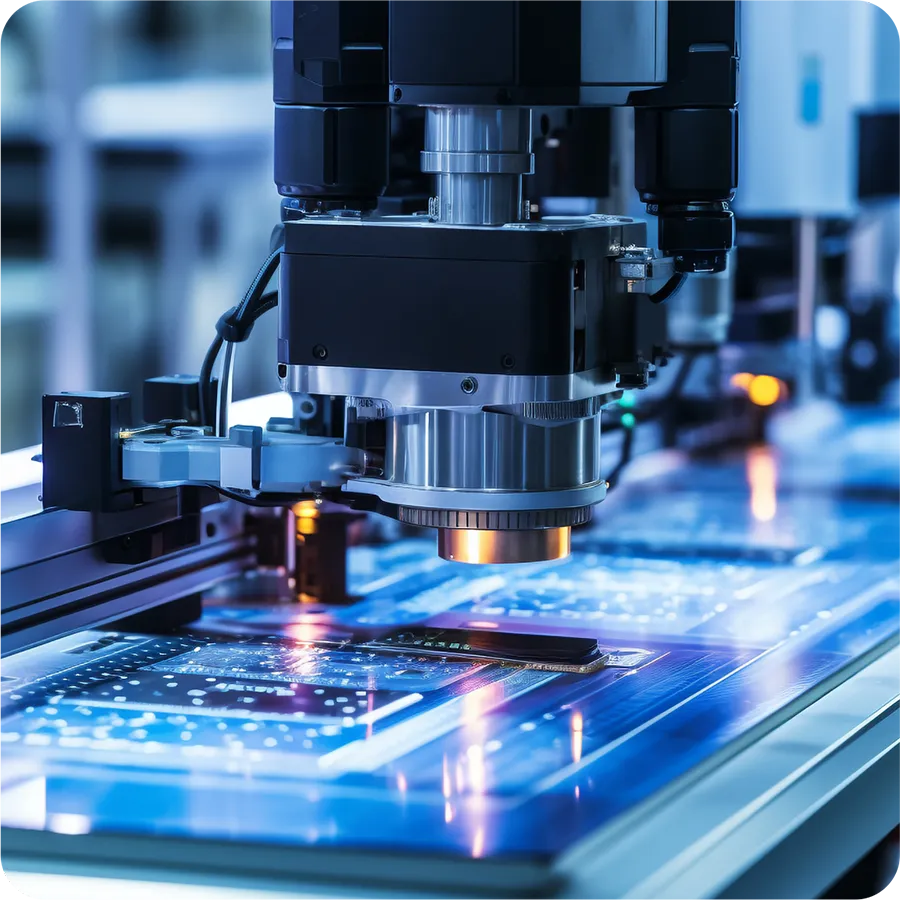
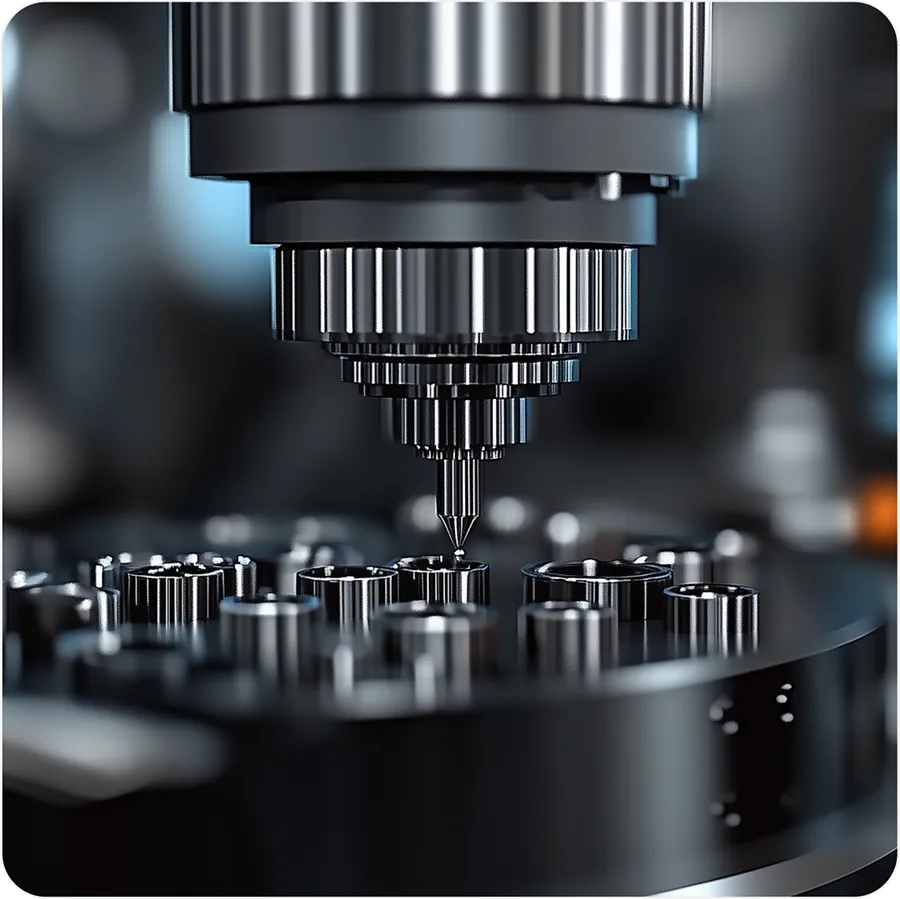
In the process of precision machining, the machining accuracy control of silicon carbide ceramic parts is crucial. Taking the silicon carbide ceramic guide rail as an example, the accuracy can be controlled within 1 micron after machine milling and manual fine polishing. The dimensional accuracy and surface quality of complex structural parts directly affect the performance of equipment, and high-precision grinding is a necessary means to achieve micron-level dimensional tolerances.
With the continuous integration of advanced fabrication processes and precision machining technologies, the manufacturing capabilities of complex structure SiC ceramic components continue to increase, providing a broader technical space for the customization of key components of semiconductor equipment.
Previous : Horizontal furnace tube SiC components: structural design and process optimization
Next :No.
 Return to previous page